
Jacques Saoutchik – The Sculptor of Elegance
Some coachbuilders built bodies. Jacques Saoutchik created automotive works of art.
COACHBUILDERS
Ilario CHIERA
7/14/20265 min read
Jacques Saoutchik – The Sculptor of Elegance
Some coachbuilders built bodies.
Jacques Saoutchik created automotive works of art.
During the golden age of the French automobile—spanning the interwar period and the early 1950s—coachbuilding was not merely a matter of mechanical engineering, but a true applied art comparable to Parisian Haute Couture.
Among the handful of virtuosos who shaped this legendary era—alongside names such as Figoni & Falaschi, Chapron, Pourtout, and Letourneur & Marchand—Jacques Saoutchik stands out with particular brilliance.
Renowned for his aesthetic boldness, his mastery of chrome, and his dramatic lines, Saoutchik created some of the most spectacular and sought-after automobiles in automotive history.
Born under the name Iakov Savtchuk in 1880, Jacques Saoutchik arrived in France at the end of the nineteenth century.
Trained as a cabinetmaker, he quickly developed an exceptional understanding of proportions, materials and craftsmanship.
In 1906, he founded his own coachbuilding company in Neuilly-sur-Seine, just outside Paris.
Few could have imagined that his name would one day become synonymous with some of the most spectacular automobiles ever created.
Unlike many coachbuilders of his era, Saoutchik never sought restraint.
His creations celebrated movement, light and theatrical elegance. Sweeping fenders, sculptural curves, polished chrome and exquisitely detailed interiors transformed each automobile into a unique masterpiece.
Saoutchik conceived the automobile as a modern, aerodynamic sculpture. His pursuit of pure aesthetics and perfect fit and finish quickly earned him a wealthy, aristocratic clientele.
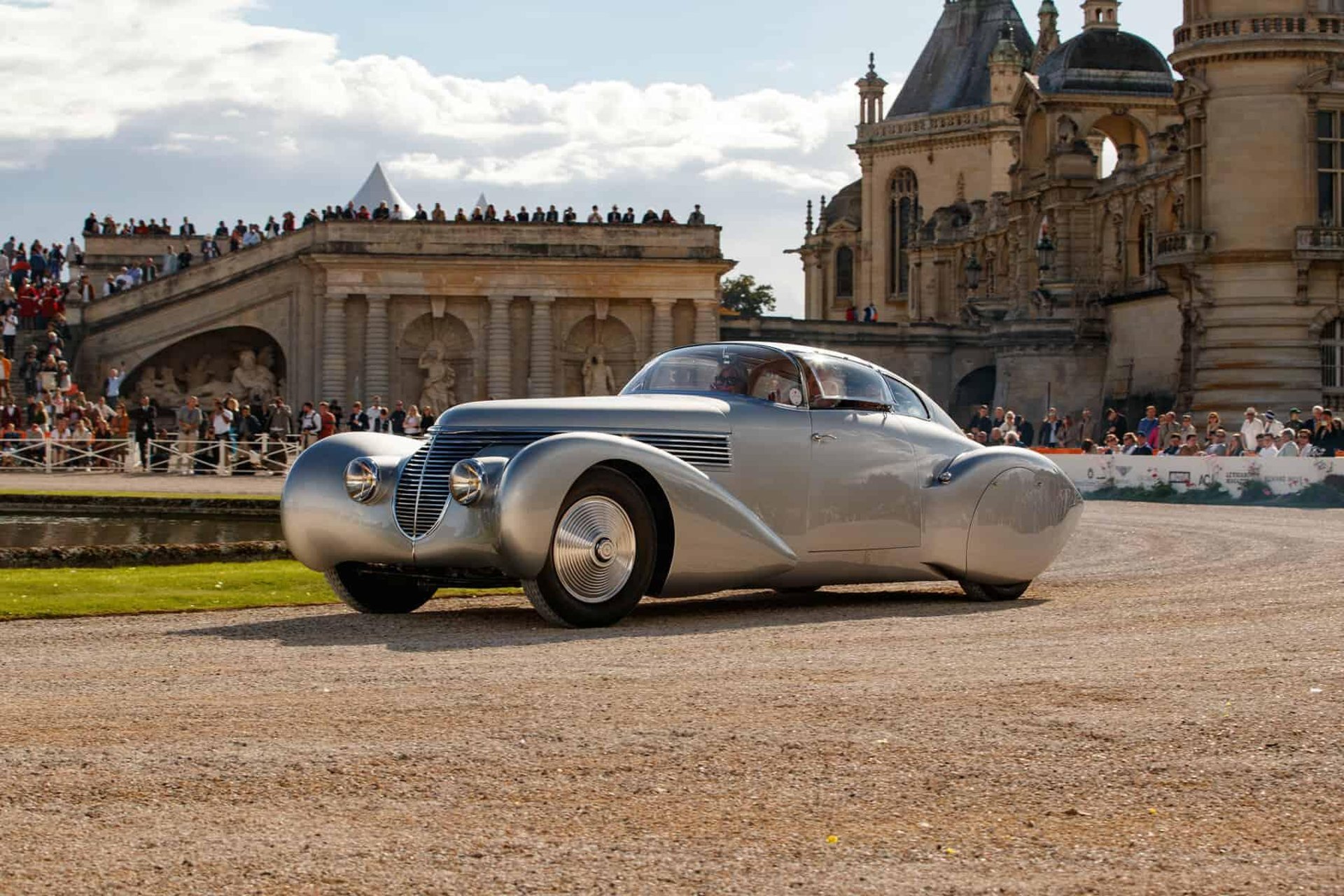
Hispano-Suiza H6C Xenia (1937)
Perhaps the ultimate expression of French Art Deco, with futuristic lines that still appear modern today.
1937 Hispano-Suiza H6C Xenia
Photo © https://automedia.revsinstitute.org/hispano-suiza-h6c-xenia
The 1920s and 1930s were the golden age of French coachbuilding, and Saoutchik stood alongside names such as Figoni & Falaschi and Franay as one of its greatest artists.
His automobiles were instantly recognizable.
Rather than following trends, Saoutchik created his own visual language. Chrome strips emphasized flowing body lines, dramatic proportions created an impression of speed even while standing still, and every surface reflected the luxury expected by an elite clientele.
His cars were commissioned by industrialists, aristocrats, movie stars and royalty—customers who wanted something no one else could own.
The Art Deco Spirit on Four Wheels
What characterizes a Saoutchik body at first glance is a striking balance between drama and technical virtuosity:
The art of gleaming chrome: Saoutchik was among the first to use stainless steel and chrome trim not merely as finishing touches, but as sculptural elements defining the body's defining lines.
Teardrop shapes: In the 1930s and 1940s, he pushed the design of the fenders and rear sections toward extraordinary organic curves, incorporating perfectly fluid wheel fairings.
Patented mechanical innovations: A bold engineer, he filed numerous patents for pantograph-style retractable roofs, pillarless retractable windows, and doors with concealed parallel-opening mechanisms.
The Saoutchik Signature: Chrome, Curves, and Extravagance
Rolling Sculpture
Jacques Saoutchik clothed the most prestigious chassis on the planet.
His most memorable creations were born of bold pairings.
Some of Saoutchik's most celebrated creations include:
Hispano-Suiza H6C Xenia (1937) – perhaps the ultimate expression of French Art Deco, with futuristic lines that still appear modern today.
Delahaye 175 S Roadster (1949) – a masterpiece of post-war French styling, famous for its sweeping pontoon fenders.
Cadillac Series 62 Cabriolet (1948) – a spectacular blend of American engineering and Parisian elegance.
Mercedes-Benz 680 S Roadster – combining German mechanical excellence with unmistakable French artistry.
Pegaso Z-102 Saoutchik (1951–1954): One of the workshop's crowning achievements based on the Spanish supercar's chassis.
And there are so many others.
Cadillac Series 62 Cabriolet (1948)
A spectacular blend of American engineering and Parisian elegance.
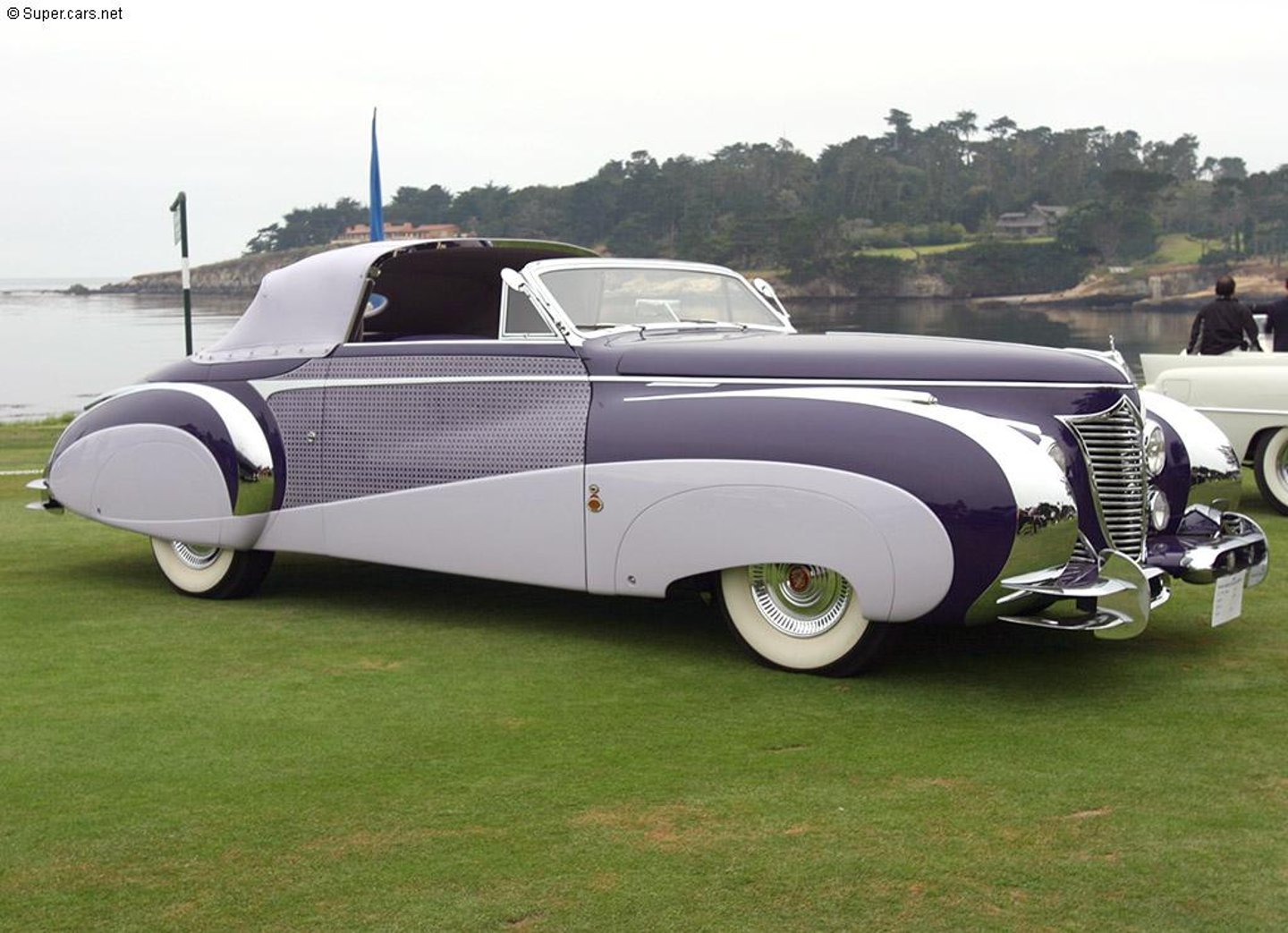
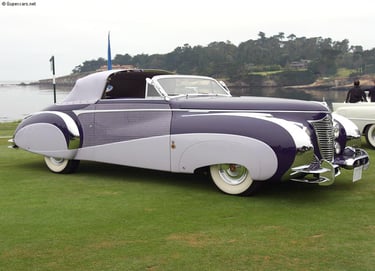
1948 Cadillac Series 62 Cabriolet
Photo ©Nick Dellis https://www.supercars.net/blog/1948-cadillac-series-62-saoutchik-cabriolet/
More Than Design
What distinguished Saoutchik was not simply beauty.
His workshop approached each automobile as a bespoke commission. Every body was built by hand, every interior tailored to the owner's wishes, every detail refined until perfection.
This philosophy resonates strongly with today's collectors.
Original Saoutchik-bodied automobiles are now among the most sought-after classics in the world, regularly achieving extraordinary prices at prestigious auctions. Their rarity, craftsmanship and artistic significance place them among the greatest achievements of automotive history.
During the Concours d'Élégance, Saoutchik automobiles often attracted more attention than the manufacturers' own stands. Their dramatic chrome details and sculptural proportions blurred the line between engineering and haute couture.
Mercedes-Benz 680 S Roadster
Combining German mechanical excellence with unmistakable French artistry.
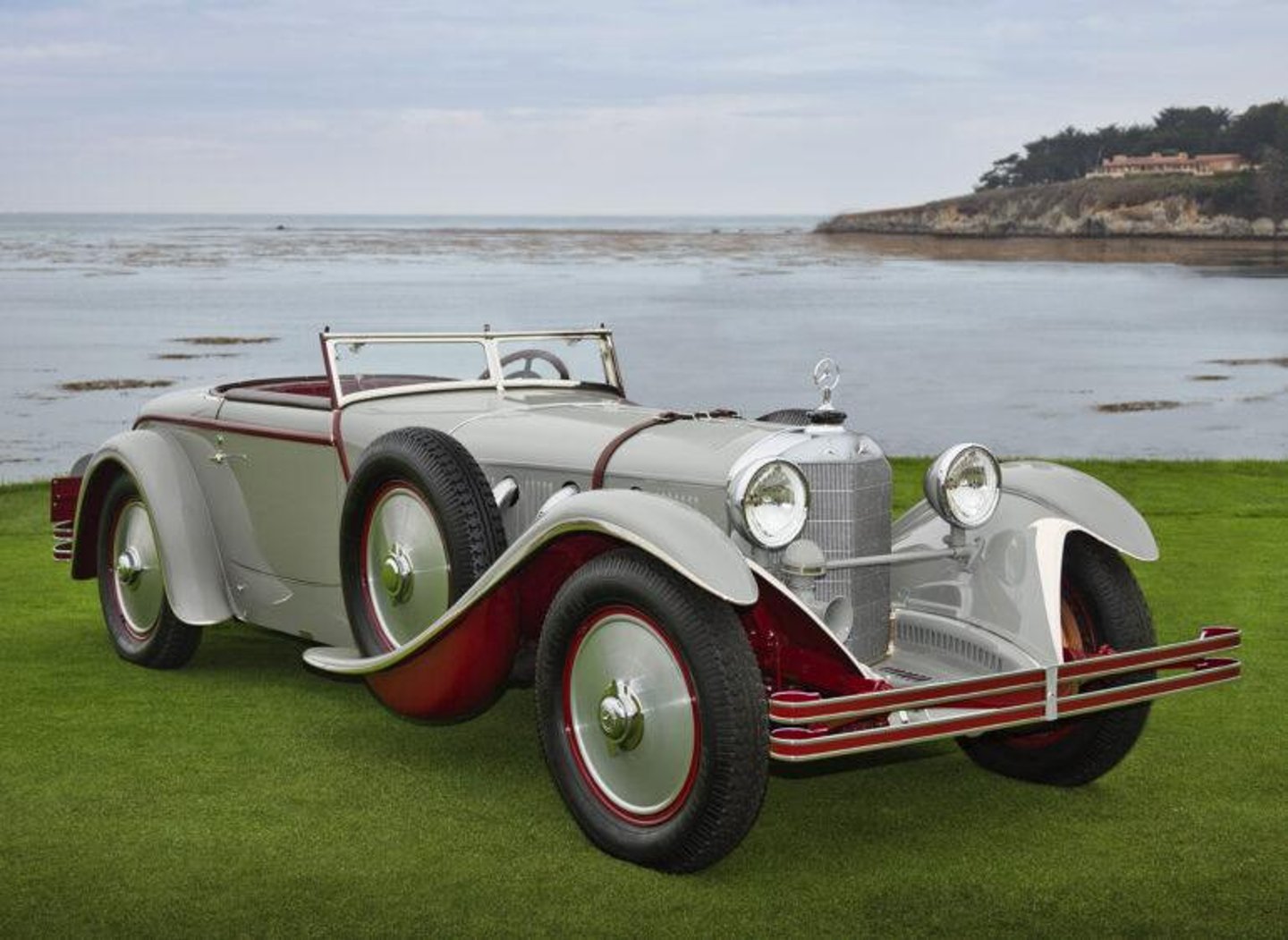
Mercedes-Benz 680 S Roadster
Photo ©Daniel Olivares ©2017 Courtesy of RM Sotheby's
The Decline and End of an Era
After World War II, the economic climate in France became highly unfavorable for ultra-luxury automobiles.
Government luxury taxes (notably the Pons Plan), combined with Europe's economic ruin and the widespread adoption of mass-produced unibody construction, drastically shrank the market for bespoke coachbuilders.
Although his son Pierre Saoutchik attempted to modernize the styling and adapt the company to the new standards of the early 1950s, the Neuilly-sur-Seine coachbuilding firm was forced to close its doors for good in 1955. Jacques Saoutchik passed away a few months later, leaving behind an invaluable legacy.
Legacy
Jacques Saoutchik left behind far more than automobiles.
He demonstrated that engineering and art could coexist in perfect harmony.
Nearly seventy years later, his creations remain among the finest expressions of French automotive elegance.
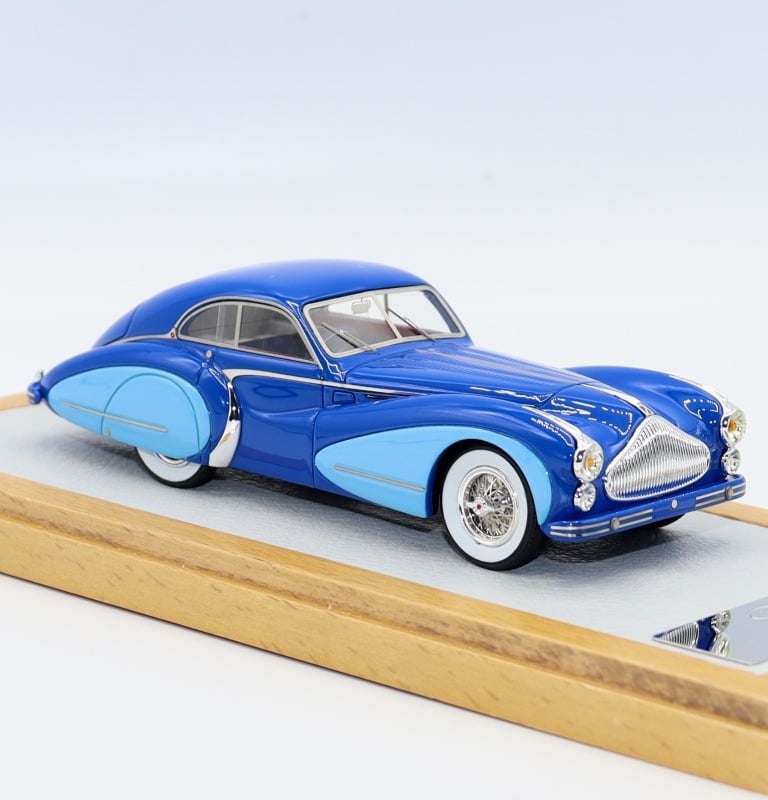
An Inspiration for Ilario
At Ilario, my fascination with Saoutchik goes beyond admiration.
Many of the automobiles that have inspired my collections bear his signature. Their sculptural forms, elegant proportions and remarkable details make them ideal subjects for scale models.
Recreating a Saoutchik automobile is never simply a matter of reducing dimensions. It is an exercise in preserving the emotion, balance and character imagined by one of history's greatest coachbuilders.
His work reminds us that an automobile can be more than a machine.
It can be art.
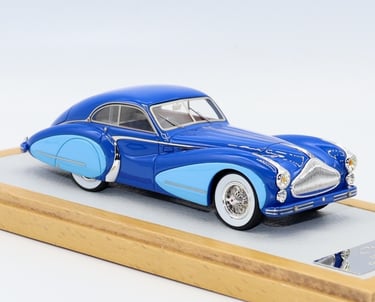
Chromes Chro55 Talbot-Lago Coupé T26 Saoutchik by Ilario
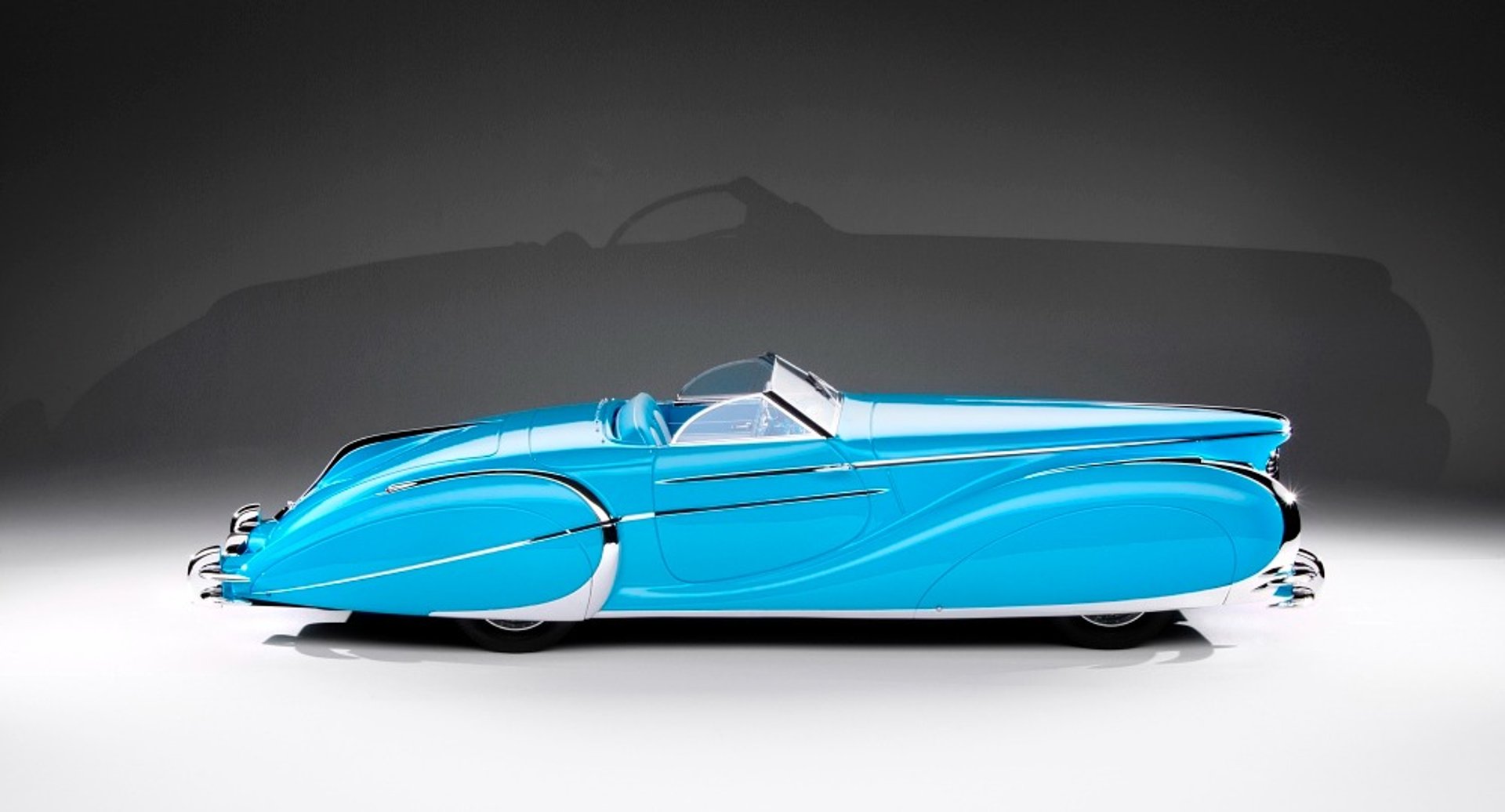
Delahaye 175 S Roadster (1949)
A masterpiece of post-war French styling, famous for its sweeping pontoon fenders.
IL1801 - 1/18 Scale modelcar of the Delahaye 175S Saoutchik made by Ilario
"Elegance is not about being noticed, but about being remembered."
Jacques Saoutchik
Explore Related Stories
More articles are coming on other coachbuilders who have left their mark on automotive history. Stay tuned.
The Journal celebrates the men, machines and craftsmanship that continue to inspire every Ilario miniature.
Avis de Copyright, Crédits Photos et Propriété Intellectuelle :
Les photographies et illustrations représentées ou citées dans cet article documentatif sont la propriété exclusive de leurs auteurs, ayants droit, photographes ou collections privées respectifs (notamment Pebble Beach Concours d'Elegance, Artcurial, RM Sotheby's et les propriétaires individuels des véhicules). Elles sont intégrées dans cette publication à des fins strictement pédagogiques, d'analyse historique et de critique d'art, conformément au droit d'auteur et sous réserve de tous les droits des propriétaires respectifs.
ATTENTION The models of my manufacture are not toys.
They are craft models, created and made by hand, including many small pieces of resin, white metal, photo-etched or turned parts.
Models for adult collectors passionate about automotive history.
They are not suitable for children under 14 years.
___________________________________________________
All trademarks, brand names, service marks and logos are the property of their respective owners, and are used for informational purposes only.
The logos and marks visible on the models are not advertisements.
They have been reproduced only to respect historical truth.